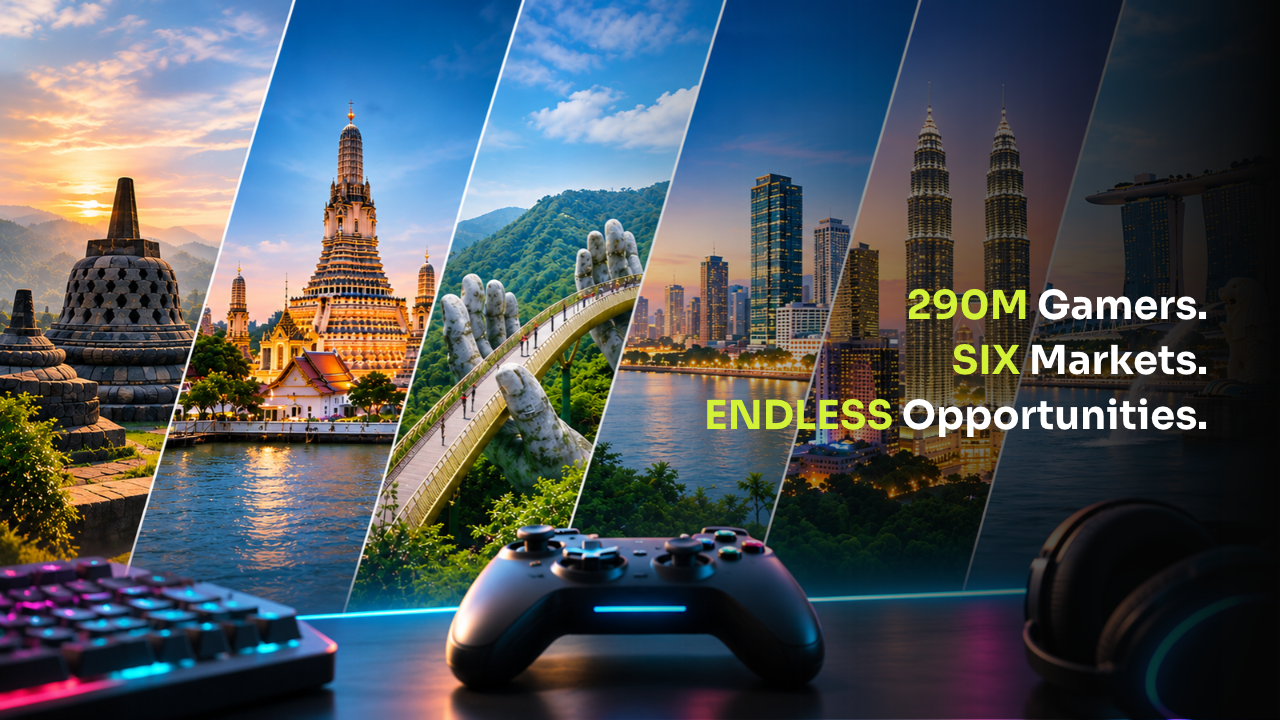
Southeast Asia is home to approximately 290 million active gamers, with a gaming market valued at around US$6.6 billion in 2025. The wider gaming ecosystem is projected to reach US$14 billion by 2030, according to Ampverse's regional market research.
For international publishers, those numbers make the region difficult to ignore. But they also raise an important question: how do you turn a large regional audience into actual players for your game?
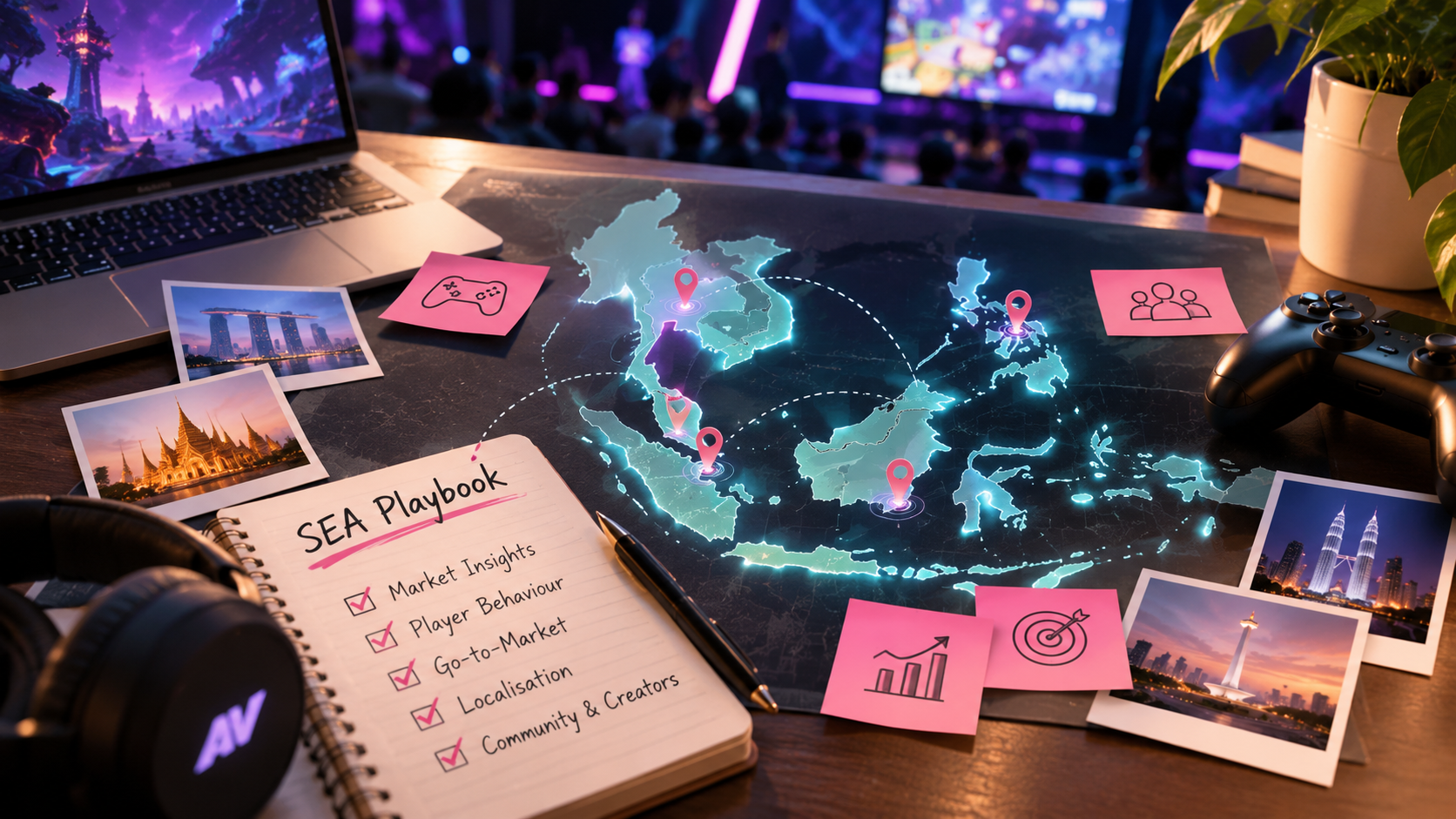
At Ampverse, one of the biggest distinctions we see is between having access to a market and understanding how to engage with it. Indonesia, Thailand, Vietnam, the Philippines, Malaysia and Singapore each have their own gaming communities, discovery habits and market dynamics.
A successful entry strategy needs to account for those differences from the beginning.
A common approach to regional expansion is to launch across multiple countries simultaneously. While this can create broad visibility, it doesn't necessarily mean the game is reaching its strongest potential audience.
Consider the differences between markets.
Indonesia is Southeast Asia's largest gaming market by player numbers, with more than 150 million gamers. Thailand has over 58 million gamers within a population of approximately 72 million, reflecting exceptionally high gaming participation. Meanwhile, the Philippines stands out for its community-driven gaming culture and strong creator influence.
These differences can shape how a game should be introduced, marketed and supported.
A competitive multiplayer title may benefit from markets with established esports communities, while a casual mobile game may require a broader discovery and acquisition strategy.
The starting point should always be the game itself: its genre, audience, monetisation model and competitive landscape. From there, publishers can prioritise the markets where the strongest opportunity exists.
Southeast Asia is predominantly mobile-driven, with mobile gaming accounting for approximately 70% of regional gaming revenue, based on Ampverse's market research.
But understanding the platform is only part of the equation.
Localisation also means understanding what players enjoy, which platforms they use, what content they consume and how they interact with gaming communities.
A global campaign may have strong creative assets, but simply translating the messaging doesn't guarantee that it will resonate locally.
Even the way a game is introduced can make a difference. Some audiences may respond more strongly to gameplay demonstrations and livestreams, while others may discover new titles through short-form creator content or community discussions.
Publishers need to adapt the experience around local behaviour, rather than assuming that one regional campaign will work everywhere.
Players don't discover games through advertising alone.
Creators, livestreamers and gaming communities have become important parts of the discovery process across Southeast Asia. Recommendations, gameplay videos and community conversations can influence whether someone decides to try a new title.
This is particularly relevant in the Philippines, where gaming is closely connected to social participation and online communities.
For publishers entering unfamiliar markets, local creators can provide more than reach. They understand the audience, the conversations and the type of content that makes a game interesting to their followers.
However, creator selection should go beyond follower counts. Relevance to the game, audience alignment and genuine familiarity with the genre are just as important.
The goal is not simply to generate attention around launch. It is to create conversations that give players a reason to discover and continue engaging with the game.
Acquisition is an important part of any market entry strategy, but downloads alone don't determine whether a launch is successful.
A campaign may generate an attractive cost per install, yet those numbers reveal very little about what happens afterwards.
Are players returning? Are they progressing through the game? Are they engaging with its community? Are they eventually converting into paying users?
These questions matter because the cost of acquiring a player is only one part of the equation.
Publishers should look at CPI alongside retention, engagement, conversion and lifetime value. This provides a more complete picture of whether a market is delivering sustainable growth.
The distinction is important: acquiring more players is not necessarily the same as acquiring the right players.
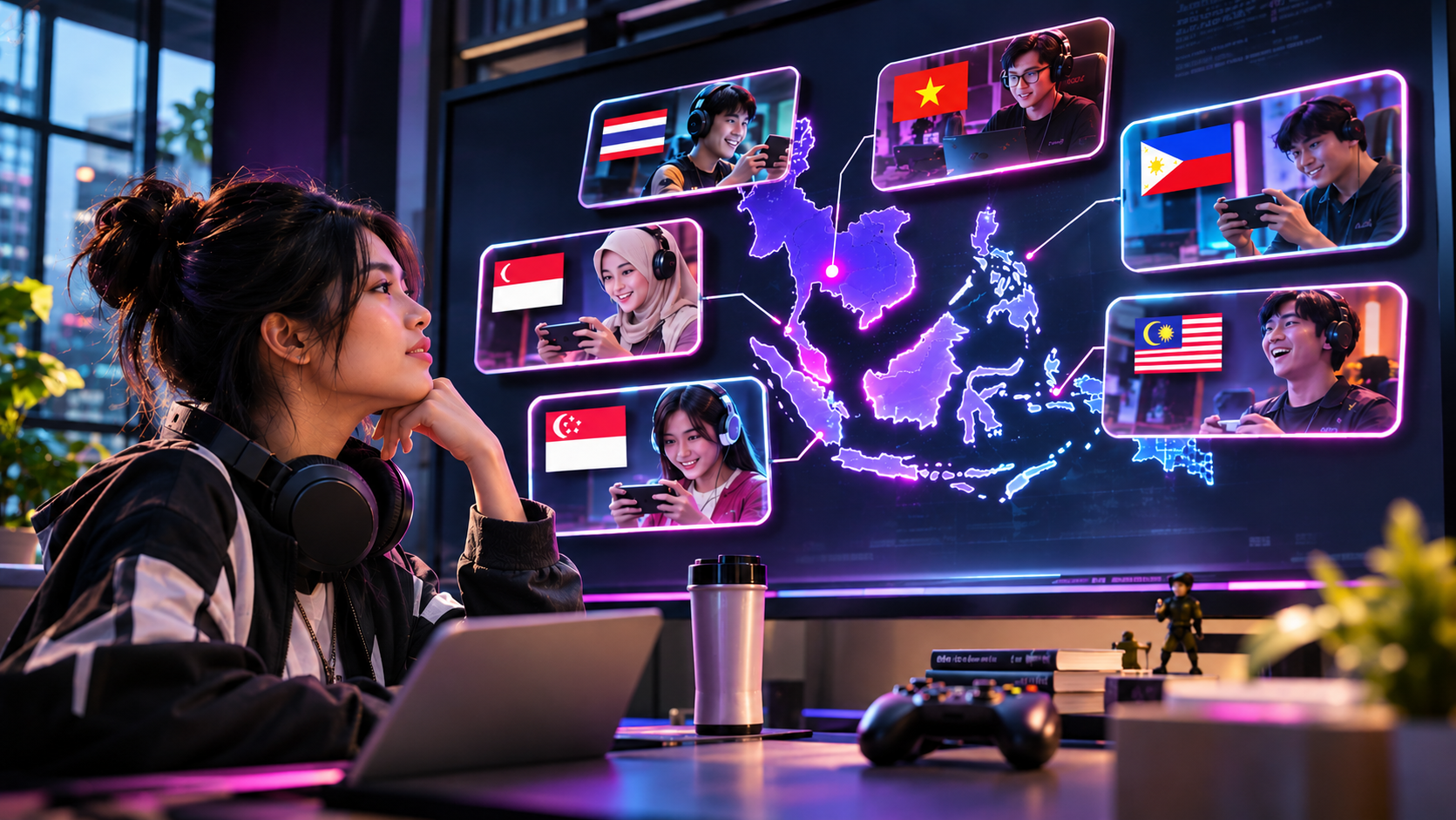
Southeast Asia offers significant opportunities for global game publishers, but its scale should not be mistaken for uniformity.
The publishers that build lasting audiences will be those that understand the differences between markets, adapt their approach to local gaming behaviour and recognise the communities influencing how players discover new games.
Entering six countries may be a regional launch. Building relevance in each one is a different challenge.